Now in Alpha — Free Access

Systematic framework for
evidence-based 510(k) classification

Regulatory equivalence determination requires systematic analysis of device characteristics, predicate lineage, and consensus standards. Veridocx provides computational methods for traceable, FDA-grounded regulatory analysis.

Supported through these programs

ChaiTech Accelerator Innovation Booster Zone (TMU) Brampton Venture Zone (TMU) MATTER Health (Chicago) Social Ventures Zone Toronto Metropolitan University University of Toronto ChaiTech Accelerator Innovation Booster Zone (TMU) Brampton Venture Zone (TMU) MATTER Health (Chicago) Social Ventures Zone Toronto Metropolitan University University of Toronto
Complete Platform

Comprehensive 510(k) Platform

From initial device classification to regulatory-grade documentation—computational methods and FDA-sourced data supporting each phase of 510(k) preparation.

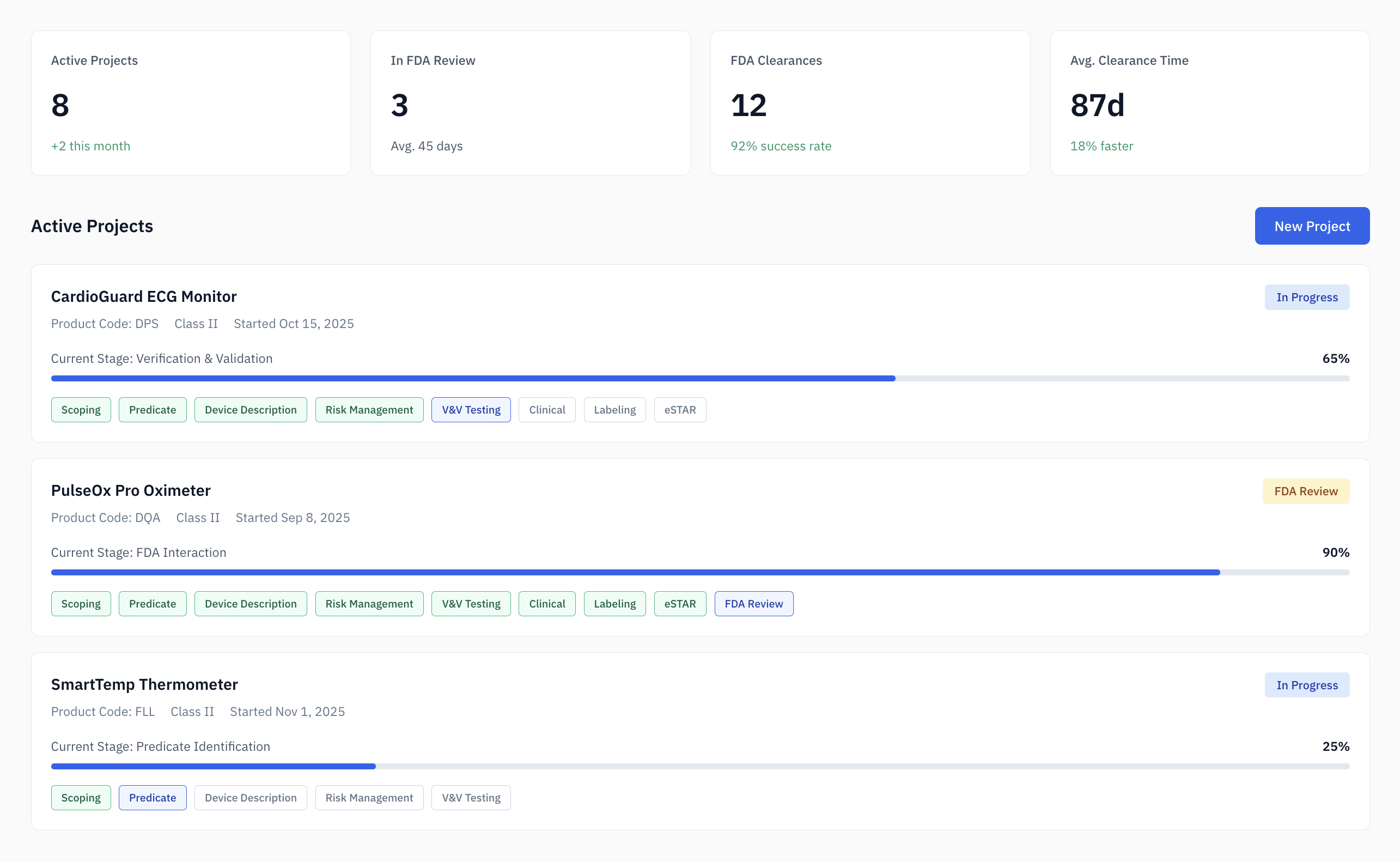
Project Dashboard

Manage multiple projects, visualize milestones, and track progress through your 510(k) preparation journey. Stay organized with a centralized view of all your regulatory activities.

Veridocx Dashboard Interface
Multi-Layered Architecture

Multi-Layered Computational Framework

Veridocx is a multi-layered regulatory intelligence system—combining rule-based validation, semantic search, predicate lineage networks, and computational reasoning. Each layer addresses specific regulatory requirements and validation needs.

Medical device regulation requires more than language models. Our architecture ensures deterministic validation, FDA-grounded retrieval, and complete traceability for regulatory submissions.

5
Validation Layers
Not a single LLM call
100%
FDA-Grounded
Every output cites sources
Full
Audit Trail
For regulatory submissions

Five-Layer Architecture

Each layer adds validation, context, and trust—LLMs are just one component

1

Rule-based validation layer

Foundation

Hard-coded logic derived from FDA guidances and CFR regulations. No hallucinations—just deterministic validation of classification rules, submission types, and regulatory pathways.

2

Semantic comparison engine

Intelligence

Vector embeddings and domain-tuned search across FDA databases (510(k)s, product codes, standards). Retrieve the most relevant precedents based on device characteristics and indications.

3

Predicate lineage networks

Context

Graph-based analysis of predicate chains and clearance histories. Trace device relationships, identify credible predicates, and flag regulatory red flags based on historical patterns.

4

LLM reasoning agents

Synthesis

Language models orchestrate workflows, synthesize evidence, and generate documentation—always grounded in retrieved facts, validated by rules, and backed by citations.

5

Human oversight & audit trails

Trust

Every recommendation includes confidence scores, source citations, and reasoning chains. RA/QA teams review, override, and maintain full control with complete traceability.

Validation Methodology

Data Sources

  • 7,042 FDA product codes with classification regulations (CFR Part 862-892)
  • 180,000+ 510(k) submissions with predicate relationships and clearance decisions
  • FDA-Recognized Consensus Standards synchronized nightly with regulatory databases

Quality Assurance

  • Expert validation with regulatory consultants and RA/QA professionals
  • Continuous monitoring of FDA database updates and regulatory guidance changes
  • Complete audit trails with source citations and confidence metrics for all outputs
White paper in preparation: "A Multi-Layered Framework for FDA Device Classification"

Why This Architecture Matters

Medical device submissions require deterministic validation, FDA-grounded evidence, and complete audit trails. Our multi-layered approach ensures every output is trustworthy, traceable, and regulatory-grade—combining computational efficiency with methodological rigor.

Workflow & Methodology

Systematic 510(k) Preparation

Each phase combines computational methods with regulatory requirements to support evidence-based classification and substantial equivalence analysis.

Security & Data

Security: TLS 1.2+ encryption, AES-256 at rest, role-based access control, no model training on private data.

All projects are encrypted in transit and at rest. Role-based workspaces maintain audit trails for key actions. Your data remains private and under your control.

Important: Veridocx is an AI software tool for document preparation and research support. It does not provide legal or regulatory advice.

Data Sources & Validation

All recommendations are grounded in FDA regulatory databases and consensus standards. Our system synthesizes data from FDA 510(k) submissions, Product Classification databases, and FDA-Recognized Consensus Standards. Database synchronization occurs nightly to maintain current regulatory information.

~7k

Product codes (Nov 2025)

~200k

510(k) records

~2k

Recognized standards

Alpha — Limited access. All outputs include source citations and confidence metrics.
About Us

Our Story

We're builders from Computer Science, Computer Engineering, and Biotechnology across the University of Toronto, University of Waterloo, and Arizona State University. After hands‑on work in ML research, data engineering, and med‑device projects, we saw a consistent pattern: regulatory work is mission‑critical, but fragmented and slow.

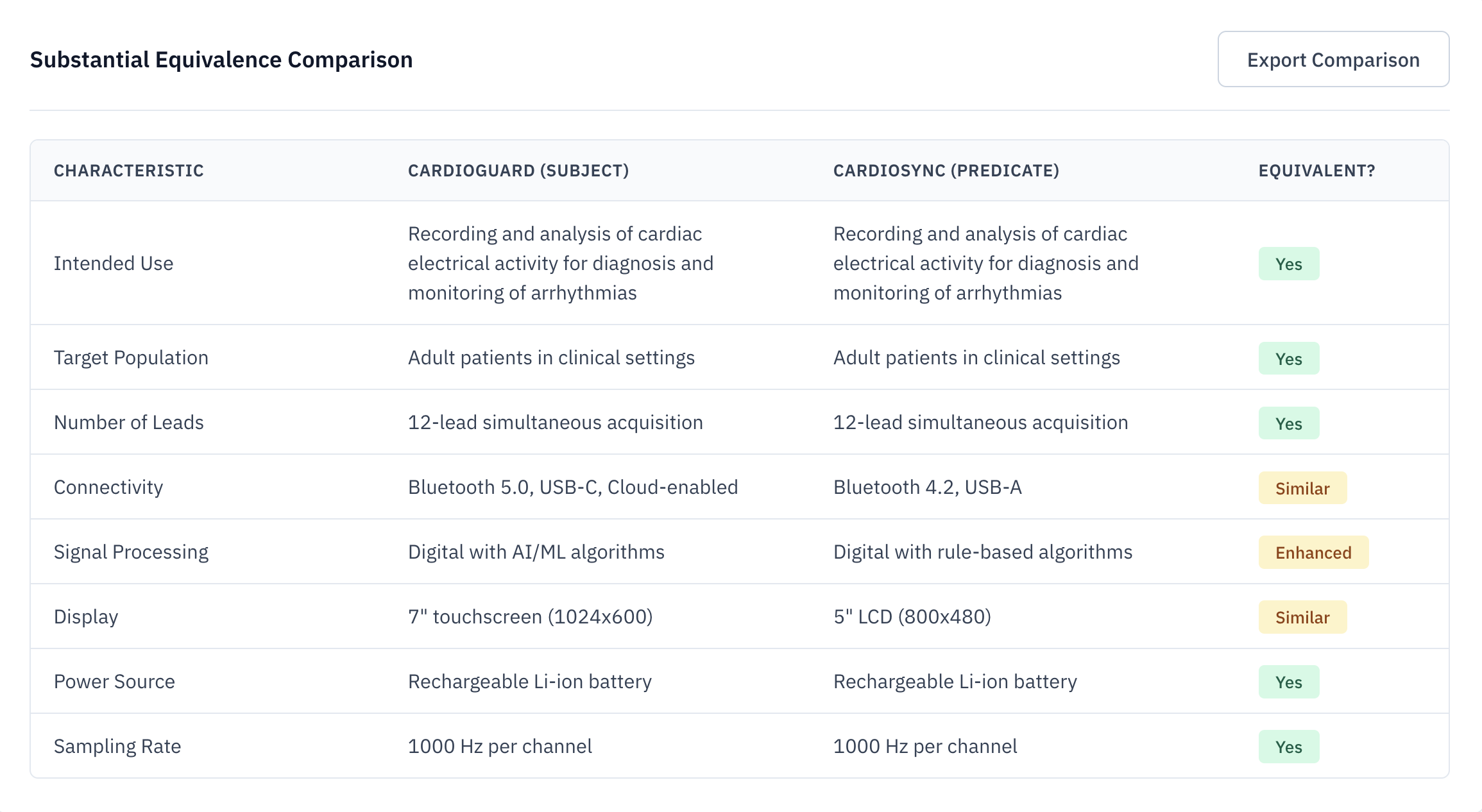
We're applying frontier AI—responsibly—to make 510(k) preparation faster, clearer, and more defensible. We don't replace expert judgment; we give RA/QA professionals and founders credible starting points, structured comparisons, and exportable rationales to move from idea to submission with confidence.

Meet the Team

Olivia Charles headshot

Olivia Charles

CEO/CRO

MHSc Bioethics, Business & Life Sciences, University of Toronto. Research focus: Regulatory frameworks and medical device policy.

Cole Connelly headshot

Cole Connelly

CFO/COO

Cell & Molecular Biology and Immunology, University of Toronto. Background in life sciences research and medical device development.

Jonas Martins headshot

Jonas Martins

CTO

Computer Engineering & AI, University of Toronto. Research interests: Knowledge graphs, semantic search, regulatory AI systems.

Maaz Ahmed headshot

Maaz Ahmed

Tech Lead

MS Software Engineering, Arizona State University. Technical focus: Distributed systems and regulatory data processing.

Matthew Li headshot

Matthew Li

Full-stack Engineer

Computer Science & Business, University of Waterloo. Expertise in full-stack development and regulatory platform architecture.

Pricing

PlanPriceDetails
Alpha PreviewFreeUsage limits apply
ProCustomComing soon

Transparent pricing will launch with general availability.

FAQ

Frequently Asked Questions

Everything you need to know about Veridocx.

Still have questions?

Contact Support

Request Access

Join our alpha program or subscribe for technical updates and methodology insights.

Or subscribe for updates: